Skip to content

Heartbreak Hotel – The Jetty, Greenwich

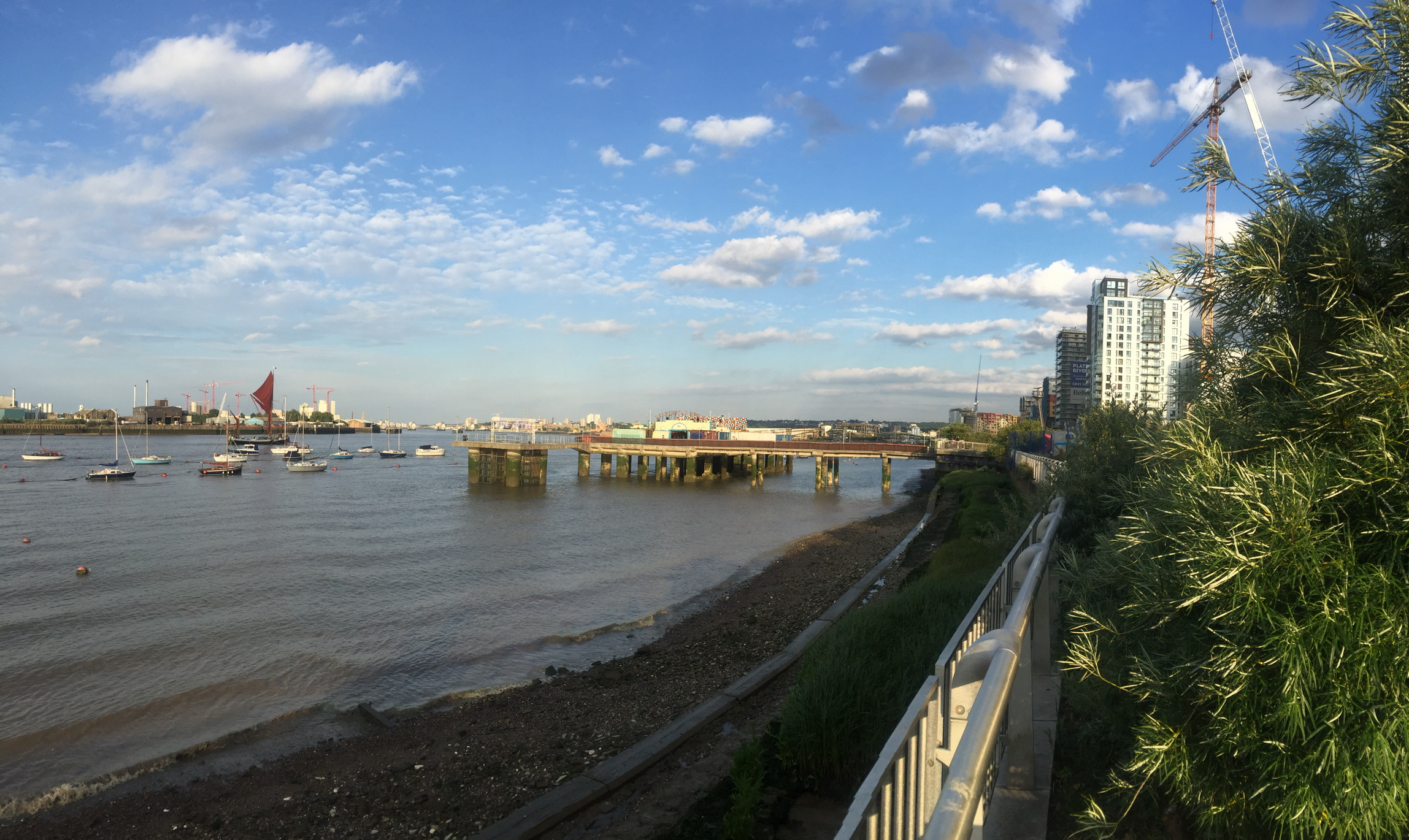
A midsummer evening. Deep blue sky and a soft breeze.

Heartbreak_Hotel_1

The tired sun slowly falls in the west. To the east, a cracked, cream building glimmers on the horizon. Neon lights flash ‘Heartbreak Hotel‘.

We are  on the Greenwich Peninsula with the Thames flowing to our left. But as we check in at the hotel reception and look at the faded posters that line the walls, we know we have arrived in a place of lost love and broken dreams.

From room to room,  we are introduced to many different people. Some are funny, some are tragic, all are residents at the hotel.

This is immersive theatre at its entertaining, cruellest best. Many of the people we meet are instantly recognisable, for we have all been residents at Heartbreak Hotel at one time or another.


Branching narratives

Choose your own story

If, like me,  you grew up in the 1980s, chances are you would have loved reading  Choose Your Own Adventure books.

choose-your-own-adventure

You were right in the centre of the story – and actions you made had a direct impact on the narrative. There were many possible endings – many of them fatal! But eventually, you’d learn the correct path through the story. You can learn a lot risk-taking in a completely safe environment.

Branching narratives are not only great for storytelling; they are great for learning too.

We are all natural storytellers. If the learner is asked to take decisions rather than passively watching or reading a narrative, they are more likely to be engaged and thus absorb the information.

A branching narrative can be a really useful learning tool for soft skills where there are no clear right and wrong answers. But producing branching narratives can be technically challenging and costly.

The BBC Academy used Twine to produce a interactive pilot Choose your Own BBC Career.

Below are some more examples of branching narratives.

Take the Knife

Take the Knife demonstrates one way of getting around the technical issues around video narrative by using You Tube– but the video still has to be produced many different ways so the cost factor could still remain.

You can see why this was made a branching rather than linear narrative. The decisions are the users to make. It shows rather than tells. The user is an active participant taking responsibility for their actions rather than a passive observer.

Connect with Harj Kamal

This was made by Kinection.  It takes a very sensitive subject and plunges the user directly into a warzone. The choices they make will determine whether the mission is a success or not. They have to decide themselves what will be the best way to connect with Harj Kamal.

Poetry Prescription

If you’re feeling a bit blue and you don’t know what to do…take a poetry prescription and find words just right for you…

Ahem. I am no poet laureate…but this commission for the Open University will help you find  the right poem for your mood. It sits on the  Open Learn platform – so after discovering your Poetry Prescription, you are in an ideal place for deeper learning on the subject.  This project was developed by Chromatrope.

And…branching narratives can teach people what your company is all about

US Interactive marketing company Jellyvision use a branching narrative technique to illustrate what their company is all about. Rather than just tell you straight off, they ask you to interact so you’re engaging with the company from the outset. This  gives you much more of a sense of what the company is all about. Personally, I had the impression the company was  fresh, slightly cheeky and creative.


Golem – The Young Vic and Trafalgar Studios

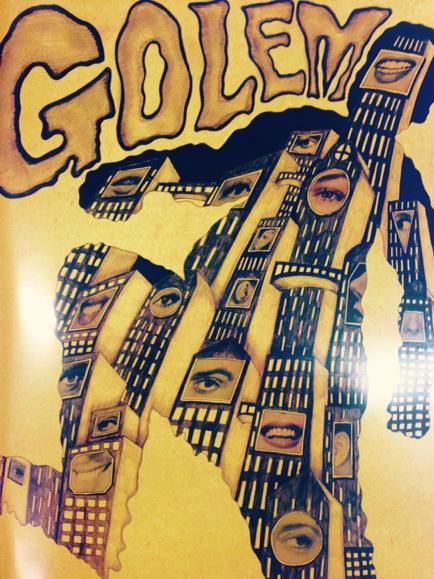
Visually stunning and mentally provocative – Golem is Metropolis on acid.

Golem

A glorious, heady mix of live music, animation and actors, the play explores our relationship with technology and our increasing reliance upon it.  Set in a fictional yet recognisable universe, the play uses the myth of the Golem as its base – the story of a man who makes a creature out of clay to work for him.

The Golem in this play represents technology and the market economy. The clay man is originally created to serve yet very quickly he is the one in control of his owner.  The market relentlessly pushes the consumers on – bigger, better faster, more!  Golem is replaced by the newer, faster Golem 2 and the clunky obsolete original Golems now litter the street – out of date and unwanted.

The play is by 1927 – a highly original production company which specialises in combing actors, animation and music. The actors work seamlessly with the fast moving images. The overall effect is unlike any theatrical experience I have seen before. Richly immersive and endlessly inventive, it’s a Technicolor parable for our times. Watch out, the machines and the economy are out to get you…

Maxine Peake – How to Hold Your Breath, Royal Court Theatre

How to Hold Your Breath feels like two plays smashed together. What happens when you sleep with the devil? What do you do if Europe suddenly crashes and you are now the unwanted immigrant trying to get to Africa for a better life?

Either one of those concepts could have made a powerful play but combining them together made for a somewhat baffling two hours. Running with no interval, the descent into darkness was relentless and confusing.

Maxine Peake (Dana) has a magnetic stage presence. She slides around the stage effortlessly owning each scene. But who is her character supposed to be?  Is she a spurned lover? Is she mad – is the Devil real? Is she supposed to be making us think about the shallowness of modern society with her specialist knowledge on ‘customer magnetics’? Is she a desperate economic migrant?

MazinePeak

Peake is supported by a strong cast who do their best with language that can be very didactic at times. There are some nice comic touches including the librarian who keeps turning up with a self-help book for almost every modern-day ailment. The relationship  between Dana and her sister is touchingly portrayed.

Yet playwright Zinne Harris does not resolve the questions raised in her play. It’s never made clear whether the catastrophe was inevitable or whether the Devil caused it.

There are many uncomfortable ideas fighting for space in this play without a clear story. If it is  interpreted as Dana’s dream  or nightmare then the lack of narrative drive does not matter so much as dreams have a shapeshifting logic all of their own.

Futhermore, if the Royal Court wasn’t putting on confusing and bizarre plays then it wouldn’t be doing its job correctly.


History is Now – Hayward Gallery, Southbank Centre

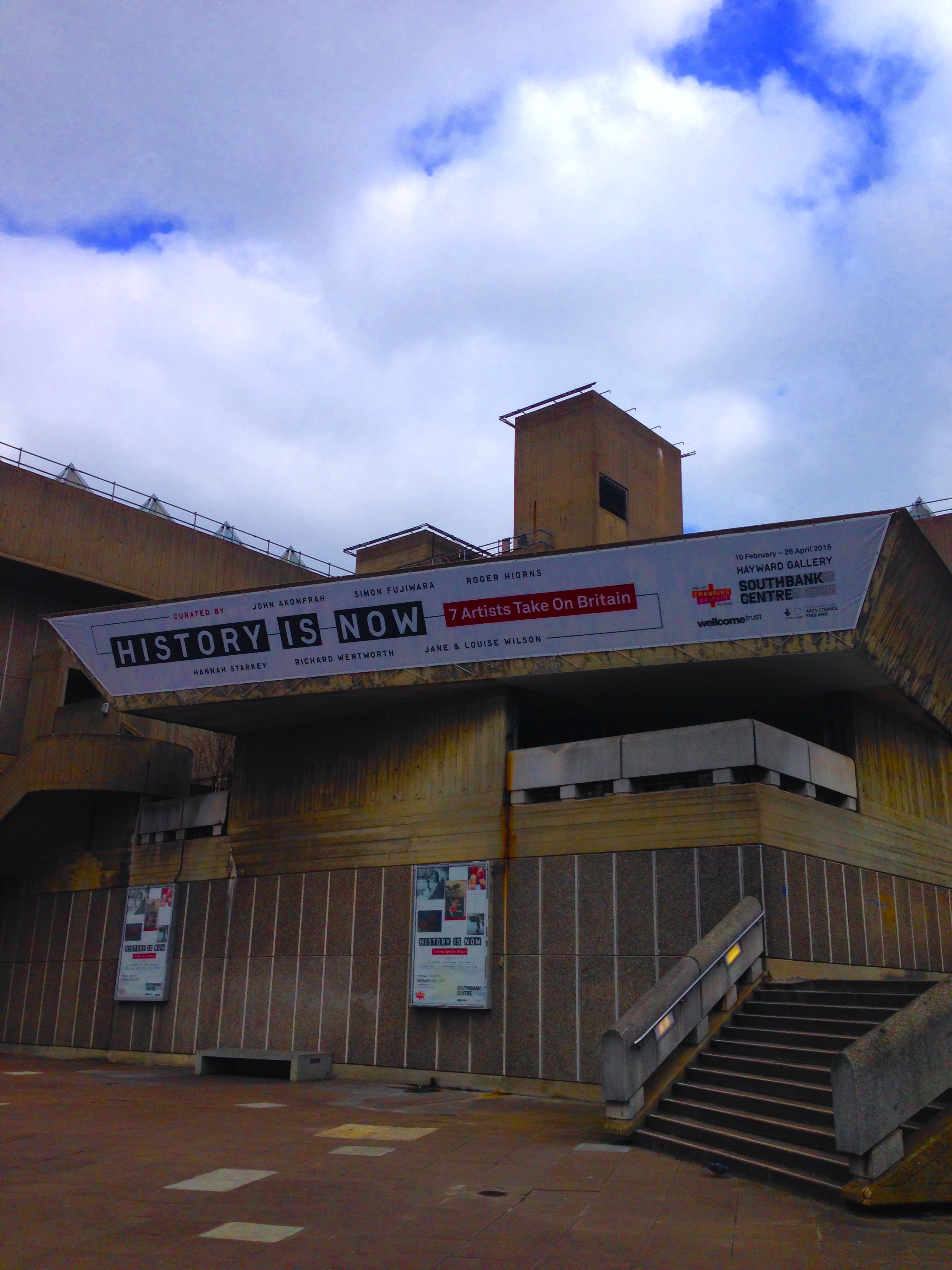
How did we get to where we are today? Changing Britain at the Southbank Centre is a series of events exploring 70 years of British history leading up to the General Election.

Changing Britain

At the Hayward Gallery, 7 artists have curated 7 very different experiences for the History is Now exhibition. Each section covers a particular period of significant cultural change, from the end of the Cold War (Richard Wentworth – complete with a ground to air missile sitting threateningly on the gallery’s roof) through to mad cow disease (Roger Hiorns’ spellbindingly forensic examination of the outbreak and its chilling effects).

FullSizeRender(2)

The exhibition demonstrates artists make great curators. Each section builds on the one before to form a clear, compelling and challenging exploration of Britain’s journey from the Second World War to today.

Simon  Fujiwara opens the exhibition with a sly look at our aspirational lifestyles and the high costs it has extracted. A lump of coal from one of the last remaining mines in the UK sits near the outfit worn by Meryl Streep as she played Margaret Thatcher. Empty Waitrose bags of Waitrose herbs lie near brooms used in the aftermath of the riots.

Hannah Starkey’s collection of photographs from the Art Council’s collection explores gender and social change. How do we interpret the meanings contained in these supposed representations of real life? John Hillier’s ‘Causes of Death’  – ‘crushed’, ‘drowned’, ‘burned’, ‘fell’ – is one photograph cropped four ways – four different disturbing narratives from a single image.

Jane and Louise Wilson look at territory, at public and private spaces and what happens when the two collide. Images of women breaking into the Greenham Common missile base are combined with chilling slogans taken from  walls in Belfast during  the time of the Troubles.

John Akomfrah explores montage as an artistic and a documentary medium.  17 films and videos flicker restlessly on screens, walls and monitors.

This is a highly original, thought provking reflection on Britain’s journey from 1945 to now. With over 250 objects to explore, it rewards a repeat viewing.

The Rose Playhouse

Older than the Globe, home to Shakespeare and Marlow, The Rose Playhouse  is one of London’s hidden historical gems.

Hidden in the literal sense as the foundations of the city’s first Tudor theatre now lie submerged underwater underneath an office block.

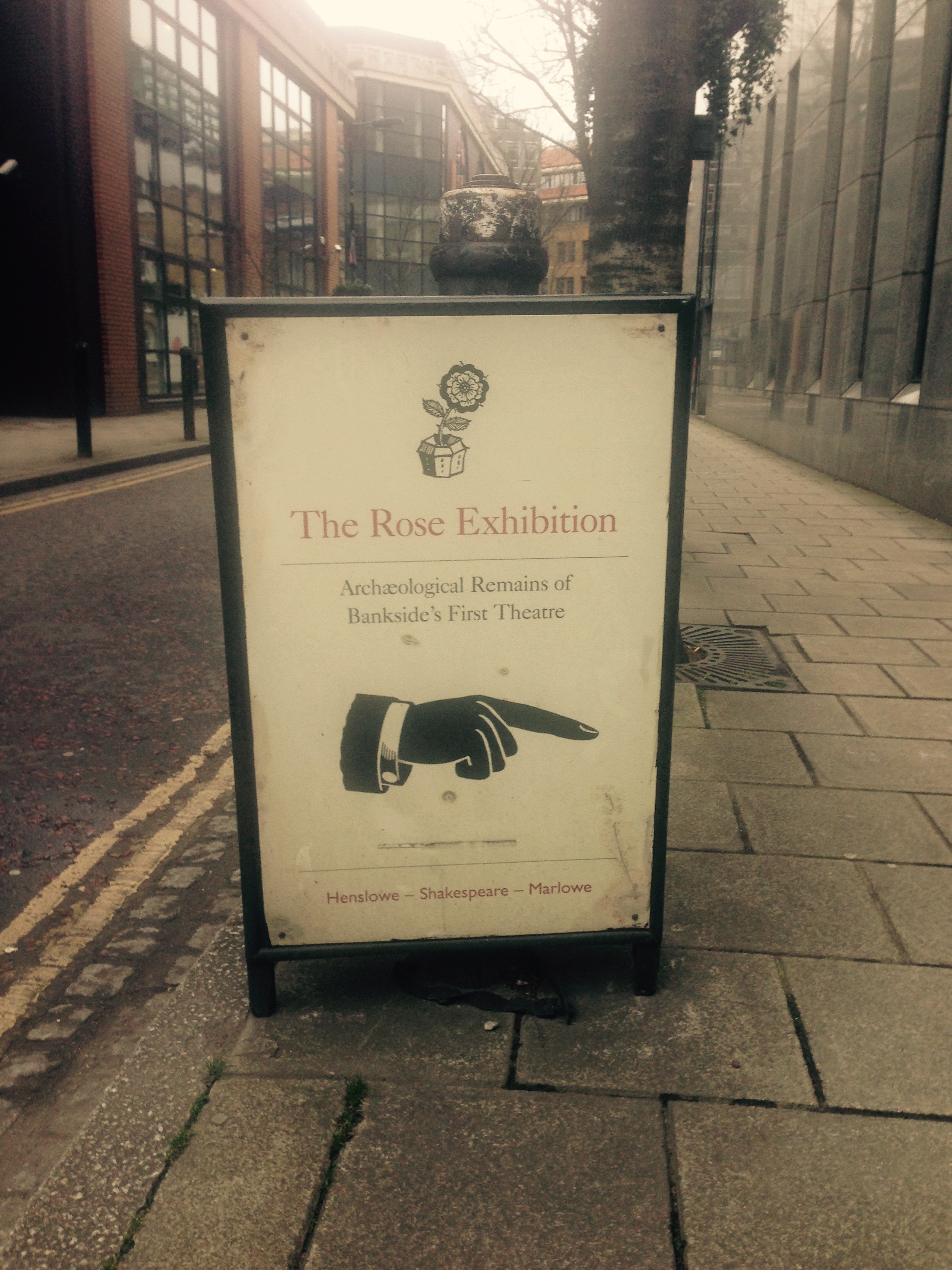
I discovered it by chance one Saturday while walking down the South Bank. A sign invited me to come and explore.
Rose Playhouse
The foundations of the theatre were discovered in 1989 during excavations for an office block. Now,  instead of an open air stage like the Globe, the Rose looks up to a concrete sky.

It is truly remarkable how it survived all these years – and what it can tell us about our not so distant past.

The Rose Playhouse has an open day every Saturday. Go along, meet the volunteers, see a production and immerse yourself in London’s theatrical heritage.

Gods and Monsters – Southwark Playhouse

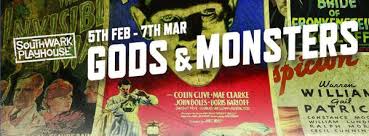
gods_monsters

Gods and Monsters was first a novel – Father of Frankenstein by Christopher Bram. It became the Oscar winning film starring Ian McKellen and Brendan Fraser and now it has its world premiere as a play at the Southwark Playhouse.

The tale of Frankenstein director James Whale’s last few days on earth is sad and unsettling. A once powerful and creative mind is disintegrating fast. Yet despite this the play is also laced with shards of dark humour.

Ian Gelder plays James Whale and captures the pride and the lost talent of a man who did everything his own way – a boy who grew up in the slums of Dudley and ended up filming some of the most iconic horror films of the 20th century. But despite a long and illustrious career, Whale knows the monsters he created – Frankenstein’s Monster and Bride of Frankenstein – will outlive the man.

Father of Frankenstein author Chris Bram says ‘People of my generation first encountered his movies on the Friday night late show: Frankenstein, Bride of Frankenstein, The Invisible Man, and the Old Dark House. We were kids and it was past our bedtime so these movies were like dreams – dark, disturbing, wonderful dreams we could share with friends…’

Gods and Monsters is set in the 1950s. James Whale is now long forgotten by the studios and lives in virtual retirement. A series of strokes has splintered his mind.

Frankenstein director James Whale was openly gay which was very unusual in the 1920s and 1930s. Gardener Clayton Boone (Will Austin) becomes the object of Whale’s disintegrating desire – his last dangerous obsession.

As James Whale’s mind unravels, his past sears through to the present.

Gods and Monsters is a powerful and affecting exploration of memory, desire and the immortality of art.

Bitter Lake – Adam Curtis new film premieres on iPlayer

Bitter Lake, Adam Curtis’ new film, made its debut on Sunday 25tJanuary. The documentary was not broadcast on a terrestrial channel. Instead, it made its debut on iPlayer, thereby making this service a channel in its own right rather than a catch up destination.

In many ways, IPlayer is a natural home for Curtis’s unique brand of shape shifting, genre denying documentaries.

Nobody else creates television quite like Adam Curtis. He locks himself away for months at a time with piles of tapes and weaves together unsettling narratives.

From The Century of the Self (2002) to All Watched Over by Machines of Loving Grace (2011), watching a Curtis film is like seeing a damaged dream.

Bitter Lake is made of archive footage from Afghanistan. Putting it on iPlayer allows Curtis the freedom to let his unsettling narrative play out for as long as he feels the story requires rather than how long the channel dictates. It is not easy to watch. There is no straightforward structure. It is not a fight between good and evil, rather an unsettling combination of fact and mood.

Because Bitter Lake is in iPlayer, sequences no longer need to be rigorously edited so they follow the style and format of a current affairs programme. Instead they can hold shots for a long time, allowing the observer to slowly become absorbed.It delves beneath the surface. It is not an easy watch but it is hypnotic and strangely beautiful in parts.

Now Adam Curtis has led the way, it will be interesting to see how other filmmakers use this new channel.

Wolf Hall – BBC Two

Wolf Hall finally opened its dark doors on Wednesday evening.

I loved Hilary Mantel’s Wolf Hall and Bring up the Bodies and so I had been eagerly waiting for this adaptation.

The bloody story of the Tudors has held a special fascination for me ever since I was little.

But Hilary’s re-telling of a well known, long ago history is very different. The use of the historical present tense makes well-trodden events feel fresh and unexpected, the well-known ending is not in sight. We see through Thomas’s eyes and are given uncanny access to his thoughts.

I was intrigued to see how the books would make the transition from page to screen.

With a stellar cast including the great theatre actor Mark Rylance as Cromwell and Jonathan Pryce as Cardinal Wolsey, this was a gorgeously complex and twisting hour of historical drama where political loyalties shifted with the wind.

It’s still very much Thomas’s story. The camera often lurks just over his shoulder, seeing events from his perspective.

Filming by candlelight to provide an extra layer of authenticity was made possible by the Alexa camera. The flickering shadows made this adaptation feel very dark and real indeed.

I am very much looking forward to watching this story twist and turn out to its violent conclusion.

If you’re interested in how books are adapted, you might find my BBC Academy podcast (featuring Sarah Phelps who adapted the much discussed Great Expectations with Gillian Anderson as Miss Havisham) of interest.

Terror and Wonder – The Gothic Imagination

What is it about things that go bump in the night? Today, dark shadows lurking in the corner can be extinguished with the flick of a light switch. However, our collective fascination with the other-wordly shows no sign of abating.

This was evidenced by my recent visit to the British Museum’s Gothic Imagination exhibition.  The exhibition took me on a suitably supernatural trip through the world of the macabre. This is a place populated with ruined castles, young ladies dressed in white and sublime landscapes where thunderstorms crash through angry purple skies.

As a former English Literature student, following the history of the Gothic novel was probably my favourite aspect of the exhibition. The journey began with the pioneers of the form, Horace Walpole and Ann Radcliffe. There was a wonderfully waspish letter from Ann to her mother-in-law.

Original manuscripts ranging from Emily Bronte’s Wuthering Heights through to Clive Barker’s first draft of Hellraiser were on display. It was wonderful to be able to follow the creative process involved with these iconic works. Seeing Shelley’s comments on Mary Shelley’s draft of Frankenstein transported me to that now legendary gathering on the shores of Lake Geneva where Byron challenged those present to come up with a ghost story.

If vampires were keeping you up at night, the exhibition also included a rather terrifying looking kit for their extermination. This rather gruesome object on loan from the Royal Armouries in Leeds included a stake and silver tipped bullets. It was not said whether it had been used in anger or not.

The exhibition is no longer. But in a suitable nod to the everlasting nature of some of the inhabitants of the Gothic world, a podcast lives on.